

Top Common Mistakes First-Time Mutual Fund Investors Make


Mutual funds have emerged as one of the most accessible and effective investment tools for wealth creation, especially for retail investors. However, for first-time investors, the simplicity of mutual fund investing can be misleading. While mutual funds are professionally managed and diversified by design, they are not foolproof, and avoiding common mistakes is essential to maximizing your returns and minimizing unnecessary risks.
Here’s a detailed guide to the most common mutual fund mistakes new investors make—and how to avoid them.
1. Focusing Only on Past Performance
It’s natural to gravitate toward top-performing funds. After all, past winners should continue winning, right? Not necessarily. One of the most frequent mistakes investors make is choosing a mutual fund solely based on its historical performance.
While performance is a valid factor, it should not be the only one. Market cycles change, fund managers shift strategies, and sectors fall in and out of favor. Always evaluate other aspects like fund objectives, consistency, risk profile, and investment horizon before committing.
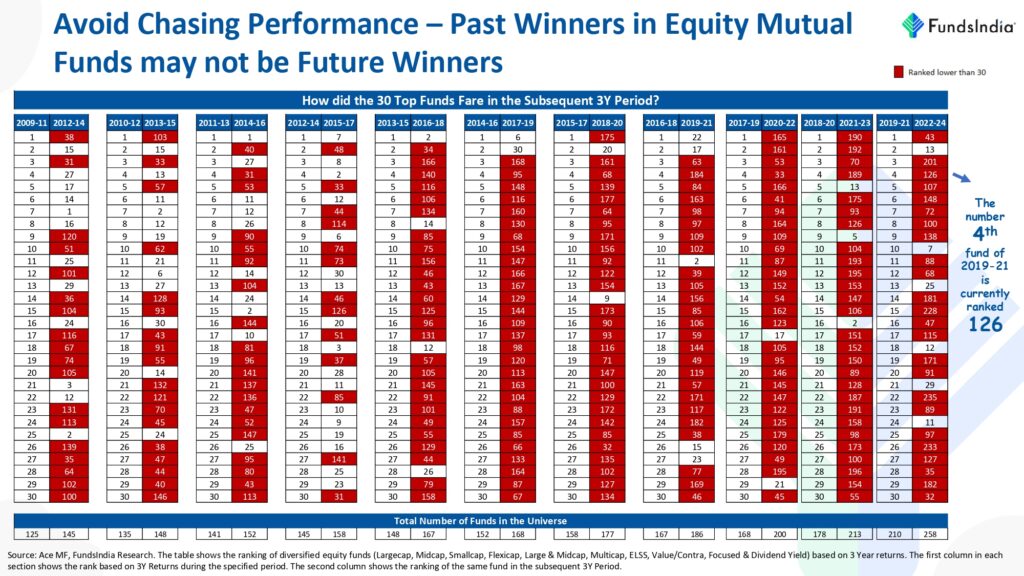
Pro Tip: Look for funds that consistently beat their benchmarks across different time frames, not just the best one-year return.
2. Investing Emotionally
Panic during downturns and euphoria during rallies—these emotional extremes often trigger poor decisions. Retail investors commonly withdraw or pause their SIPs during market corrections, fearing further loss. Ironically, such times often present the best opportunities to invest more.
Avoid letting market sentiment drive your actions. Stay committed to your plan, especially during market volatility. Remember, mutual funds work best over the long term, and knee-jerk reactions can disrupt your compounding journey.
3. Heavy Exposure to Sectoral and Thematic Funds
Sectoral and thematic funds invest in specific industries or concepts (like IT, banking, or ESG). While they can deliver impressive returns during favorable cycles, they also carry concentrated risk.
For beginners, investing too much in these funds can backfire. These strategies require timing and deep understanding—something even seasoned investors struggle with. Instead, focus on diversified funds until you gain more experience.
4. Overweighting Mid-Cap and Small-Cap Funds
Mid- and small-cap funds offer high growth potential, but they also come with elevated risk and volatility. Many new investors chase returns in these categories without realizing their downside in bear markets.
If you are not emotionally and financially prepared to handle sharp drawdowns, limit your allocation here. A balanced exposure to large-cap and hybrid funds may offer better stability.
5. Not Reviewing Your Portfolio
Mutual funds require more than just a ‘set it and leave it’ approach. Your financial goals, risk appetite, and market conditions evolve—and so should your portfolio.
Review your mutual fund portfolio at least once a year. Make adjustments to rebalance your asset allocation, remove underperforming funds, and ensure your investments remain aligned with your goals.
6. Not Having a Financial Plan
Investing without a financial roadmap is like sailing without a compass. Don’t get influenced by what’s trending or what your friends are buying. Your investments must reflect your life goals—be it education, home buying, or retirement.
Build a comprehensive financial plan that defines short-, medium-, and long-term goals. Choose mutual funds that align with each goal’s tenure, risk tolerance, and return potential.
7. Ignoring Risk Tolerance
Your risk appetite should be the foundation of your investment strategy. Unfortunately, many first-time investors either overestimate or underestimate their comfort with market volatility.
If you are a conservative investor, debt or balanced funds may be a better fit. If you’re young and can handle volatility, equity funds could be suitable. Assess your risk profile honestly before selecting your funds.
8. Investing Short-Term Money in Equity
Equity funds are designed for long-term wealth creation. If you invest funds earmarked for short-term needs (like a down payment or vacation) into equities, you expose them to high market risk.
For goals within 1–3 years, stick to low-risk debt instruments like liquid funds or short-duration funds.
9. Trying to Time the Market
“Buy low, sell high” is easier said than done. Even experts find market timing difficult. As a new investor, trying to predict market highs and lows can be counterproductive.
A more effective approach is to invest consistently through Systematic Investment Plans (SIPs). SIPs help you average out purchase costs over time and reduce the impact of short-term volatility.
10. Over-Diversification
Yes, diversification is crucial—but overdoing it can dilute your returns. Holding too many similar funds or schemes with overlapping portfolios leads to redundancy and confusion.
Instead of investing in multiple funds, aim for quality over quantity. Choose 4–5 well-managed funds across key categories to build a lean yet diversified portfolio.
Diversification can help you achieve a smoother investment experience.
Still confused? We made it easy. Just sign in and access the Five Finger strategy’s diversification tweaked by FundsIndia, especially for clients.
11. Ignoring the Fund Manager’s Track Record
Fund managers play a pivotal role in a fund’s success. Their strategy, experience, and consistency in navigating market cycles impact performance.
Before investing, check the fund manager’s credentials, tenure, and track record across different schemes. A steady hand can make a big difference in volatile markets.
12. Neglecting Portfolio Rebalancing
Over time, the asset allocation in your portfolio can drift due to varying returns. A portfolio that started as 60% equity and 40% debt could turn into 75% equity after a strong bull run, exposing you to more risk.
Rebalancing at least annually ensures that your portfolio stays aligned with your risk profile and investment objectives. Weed out laggards and reallocate gains to maintain balance.
13. Imitating Other Investors
Copying others—friends, relatives, or influencers—is rarely a good strategy. What works for someone else may not suit your goals, risk tolerance, or financial situation.
Avoid falling for the “hot tip” syndrome. Your investment strategy should be as unique as your fingerprint.
14. Choosing the Dividend Option Over Growth
Mutual fund investors often choose the dividend option, hoping for regular payouts. However, this reduces the compounding effect of reinvested returns.
Unless you need regular income, opt for the growth option, which allows your returns to accumulate and grow faster over time.
15. Treating Mutual Funds Like Stocks
Some investors expect mutual funds to deliver stock-like returns instantly. They buy and sell mutual funds as if they were trading stocks—frequent switching and short-term expectations lead to disappointment.
Mutual funds, especially equity-based ones, are not meant for trading. They require patience, discipline, and time to generate meaningful wealth.
Key Takeaways
- Don’t chase past performance—focus on consistency and fund fundamentals.
- Align your investments with your goals, risk profile, and investment horizon.
- Rebalance and review your portfolio periodically to stay on track.
- Avoid emotionally-driven decisions—stick to your plan.
Conclusion
Avoiding these common mutual fund mistakes can significantly improve your investment outcomes. As a first-time investor, the goal isn’t to get everything perfect from day one, but to build a disciplined, informed, and goal-oriented investment journey.
At FundsIndia, we are committed to helping you invest smarter with expert-curated funds, data-backed strategies, and advisory support tailored to your financial goals.
Ready to begin your mutual fund journey the right way?
Start investing with FundsIndia today.
Explore India’s most trusted online mutual fund platform for curated funds, expert guidance, and smart investing tools—all in one place.
Need help building your portfolio? Talk to our advisor today.
Related Articles
View All





Keep an eye on your inbox—your first digest will be arriving soon!

Keep an eye on your inbox—your first digest will be arriving soon!
